
Oily Scalp and Dry Hair: Causes, Care Tips and Salon Treatments
Having an oily scalp and dry hair can be frustrating, especially when your roots become greasy shortly after washing while the mid-lengths and ends remain rough, dry or frizzy. This combination is common among people who have long hair, chemically treated hair or a hair care routine that does not fully address the needs of both the scalp and hair lengths. Understanding the causes of oily scalp and dry hair is the first step towards choosing the right products, improving hair manageability and maintaining healthier-looking hair.
At Le Classic Hair Studio, understanding your scalp condition, hair texture and previous chemical treatments is an important part of choosing suitable hair care options. Whether you are experiencing excess oil at the roots, dryness after hair colouring or frizz caused by environmental conditions, a personalised hair care approach can help you determine which products and salon treatments may be appropriate for your needs.
What Does Oily Scalp and Dry Hair Mean?
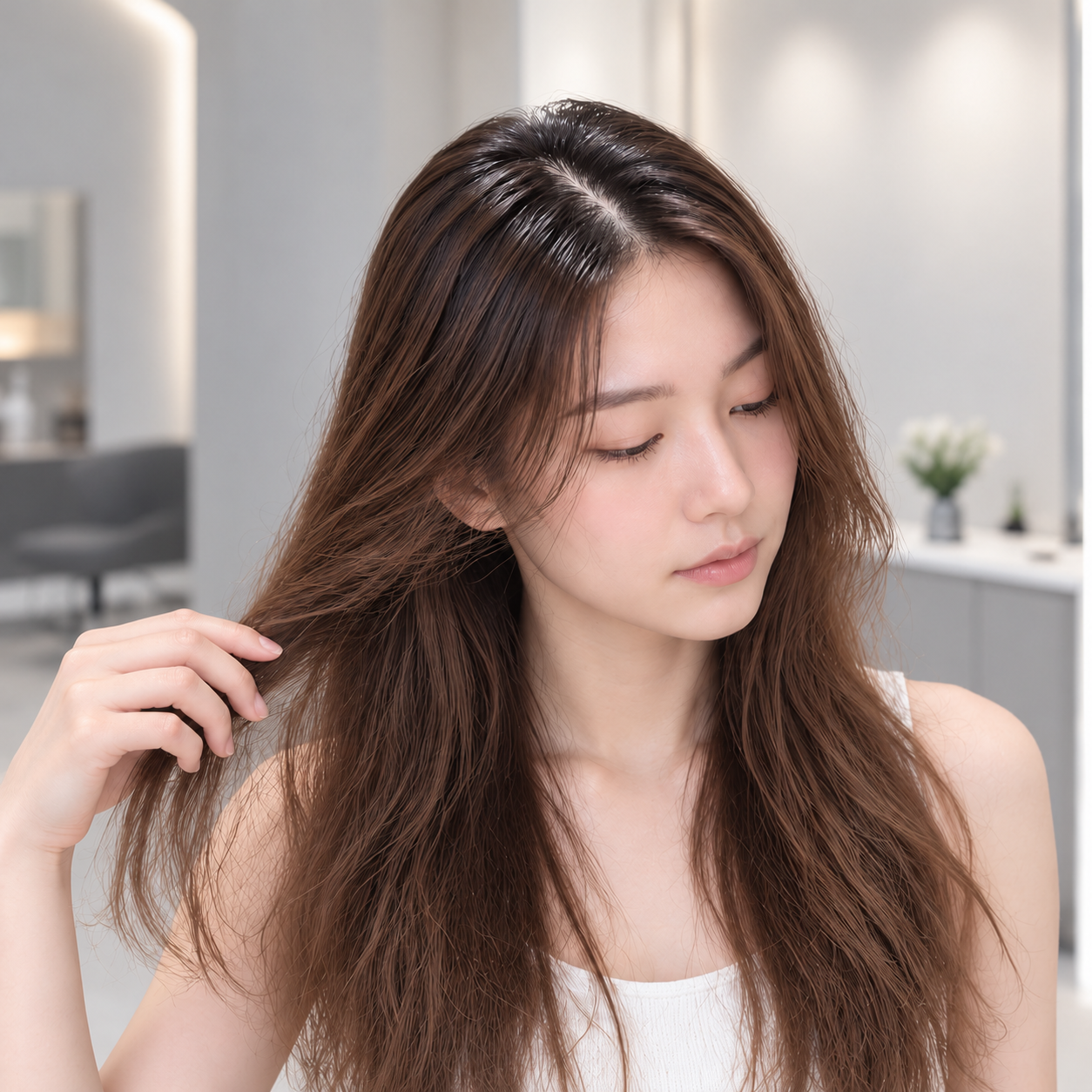
Oily scalp and dry hair describes a condition in which the scalp produces noticeable amounts of natural oil while the hair lengths and ends feel dry, rough or difficult to manage. Although these two concerns may seem contradictory, they can occur at the same time because the scalp and hair shaft have different needs.
The scalp contains sebaceous glands that produce sebum, a natural oil that helps lubricate and protect the skin. However, this oil does not always spread evenly along the entire length of the hair. People with long, curly, coarse, bleached or chemically treated hair may notice that their roots become oily while their ends remain dry and tangled.
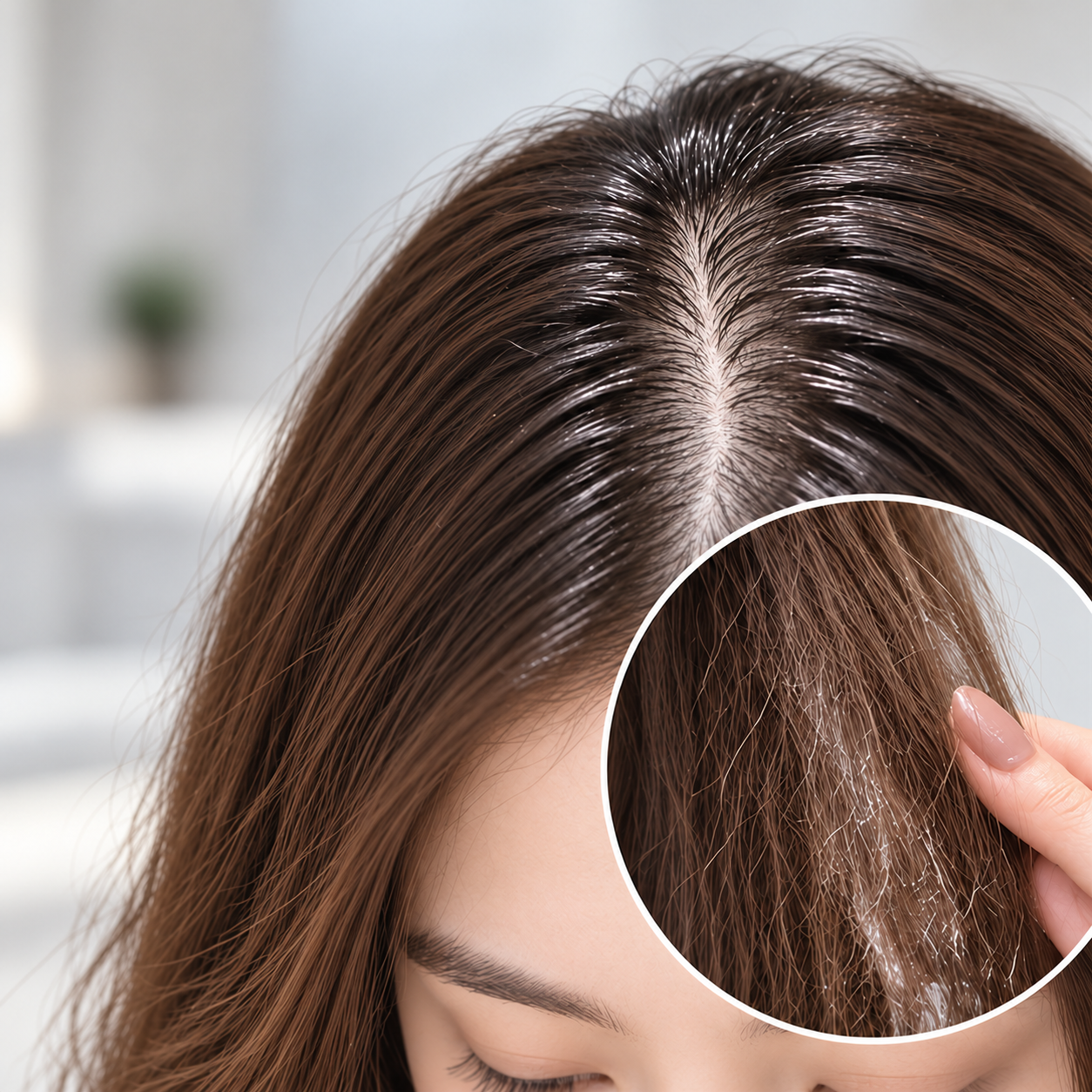
Common signs of oily scalp and dry hair include greasy roots, flat-looking hair, rough ends, frizz and frequent tangling. Some people may also feel that their hair needs washing every day because the scalp becomes oily quickly, even though the ends still lack softness and shine.
The most effective approach is to cleanse the scalp according to its needs while providing sufficient conditioning and protection to the hair lengths. Using the right products for each area can help improve the overall appearance and manageability of your hair without unnecessarily weighing down the roots.
What Causes Oily Scalp and Dry Hair?
There are several possible causes of oily scalp and dry hair, including natural oil production, hair care habits, chemical treatments and environmental conditions. In many cases, more than one factor contributes to the problem.
Excess Sebum Production
One of the main reasons for an oily scalp is excess sebum production. Sebum is naturally produced by the scalp to help maintain the skin’s protective barrier, but some people produce more oil than others. Genetics, hormonal changes, age and individual differences can influence how quickly the scalp becomes oily.
When excess oil accumulates around the roots, the hair may look greasy, flat or limp. However, the presence of oil on the scalp does not necessarily mean that the mid-lengths and ends are adequately conditioned. This is why people can experience greasy roots alongside dry or damaged hair ends.
Using Unsuitable Shampoo or Hair Care Products
Choosing the wrong shampoo can also contribute to the problem. A shampoo that does not cleanse effectively may leave excess oil and product residue on the scalp, while a product that is too harsh for your hair condition may leave the lengths feeling rough and dry.
People with oily scalps may need to wash their hair more frequently, but this does not mean that they should use aggressive cleansing products every time. Instead, it is important to select a shampoo that suits the scalp while considering whether the hair is coloured, bleached, dry or chemically treated.
Applying shampoo mainly to the scalp and allowing the lather to rinse through the lengths can help remove excess oil without repeatedly scrubbing the ends. A suitable conditioner can then be applied to the mid-lengths and ends to improve softness and reduce tangling.
Hair Colouring and Chemical Treatments
Hair colouring, bleaching, perming and chemical straightening can affect the hair’s outer protective structure. Repeated chemical processing, especially bleaching, may leave the hair more porous, rough and vulnerable to breakage.
As the hair becomes more porous, it may be harder to maintain a smooth appearance and may require more conditioning to improve manageability. Meanwhile, the scalp may continue producing its usual amount of natural oil, resulting in greasy roots and dry ends.
If you frequently colour or lighten your hair, using suitable colour-friendly hair care products and reducing unnecessary heat styling may help maintain its appearance. At Le Classic Hair Studio, discussing your previous chemical services and current hair condition with a stylist can help you explore suitable treatment options.
Heat Styling and Environmental Factors
Frequent use of hair dryers, straighteners and curling irons can contribute to dryness, particularly when high temperatures are used repeatedly without heat protection. Over time, excessive heat exposure may make the hair feel rougher and more difficult to manage.
Environmental conditions can also influence how your hair feels. In Malaysia, warm temperatures and high humidity can make the scalp feel sweaty and oily, while frequent air-conditioning, sun exposure and heat styling may contribute to dryness or frizz in the hair lengths. Humidity does not directly cause every case of dry hair, but it can make frizz more noticeable, especially when the hair is already damaged or porous.
To manage these concerns, use a suitable heat protectant, avoid unnecessarily high styling temperatures and choose hair care products that suit your scalp and hair texture.
Incorrect Application of Conditioner and Hair Oil
Conditioner and hair oil can be helpful for dry hair, but their application matters. Applying heavy conditioner or excessive hair oil directly to an oily scalp may make the roots appear greasier and cause the hair to feel flat.
However, avoiding conditioner completely is not the solution. Dry hair lengths still need conditioning to improve softness, reduce friction and make detangling easier. Applying conditioner mainly to the mid-lengths and ends can help provide the necessary care without adding unnecessary weight to the roots.
People with fine hair may prefer lightweight formulas, while those with thick, coarse or chemically treated hair may benefit from richer conditioning products. The best choice depends on the hair’s condition, texture and response to different products.
Product Build-Up and Scalp Conditions
Frequent use of styling creams, dry shampoo, hair oils and other styling products can contribute to product build-up, particularly when products are not removed properly. Build-up may leave the scalp feeling heavy and the hair looking dull.
In addition, an oily scalp accompanied by persistent itching, redness, irritation or greasy flakes may indicate a scalp condition such as dandruff or seborrhoeic dermatitis. If these symptoms continue or become worse, seek advice from a healthcare professional or dermatologist rather than relying solely on cosmetic salon treatments.
How to Care for Oily Scalp and Dry Hair at Home
Managing oily scalp and dry hair requires a balanced routine that addresses excess oil at the roots while providing adequate conditioning to the lengths. Rather than using the same products in the same way throughout your hair, consider the different needs of your scalp and ends.
Choose the Right Shampoo
The first step is selecting a shampoo that cleanses the scalp effectively without leaving the hair lengths excessively rough. If your scalp becomes oily quickly, you may need to wash your hair daily or every other day, depending on your activity level, oil production and personal comfort.
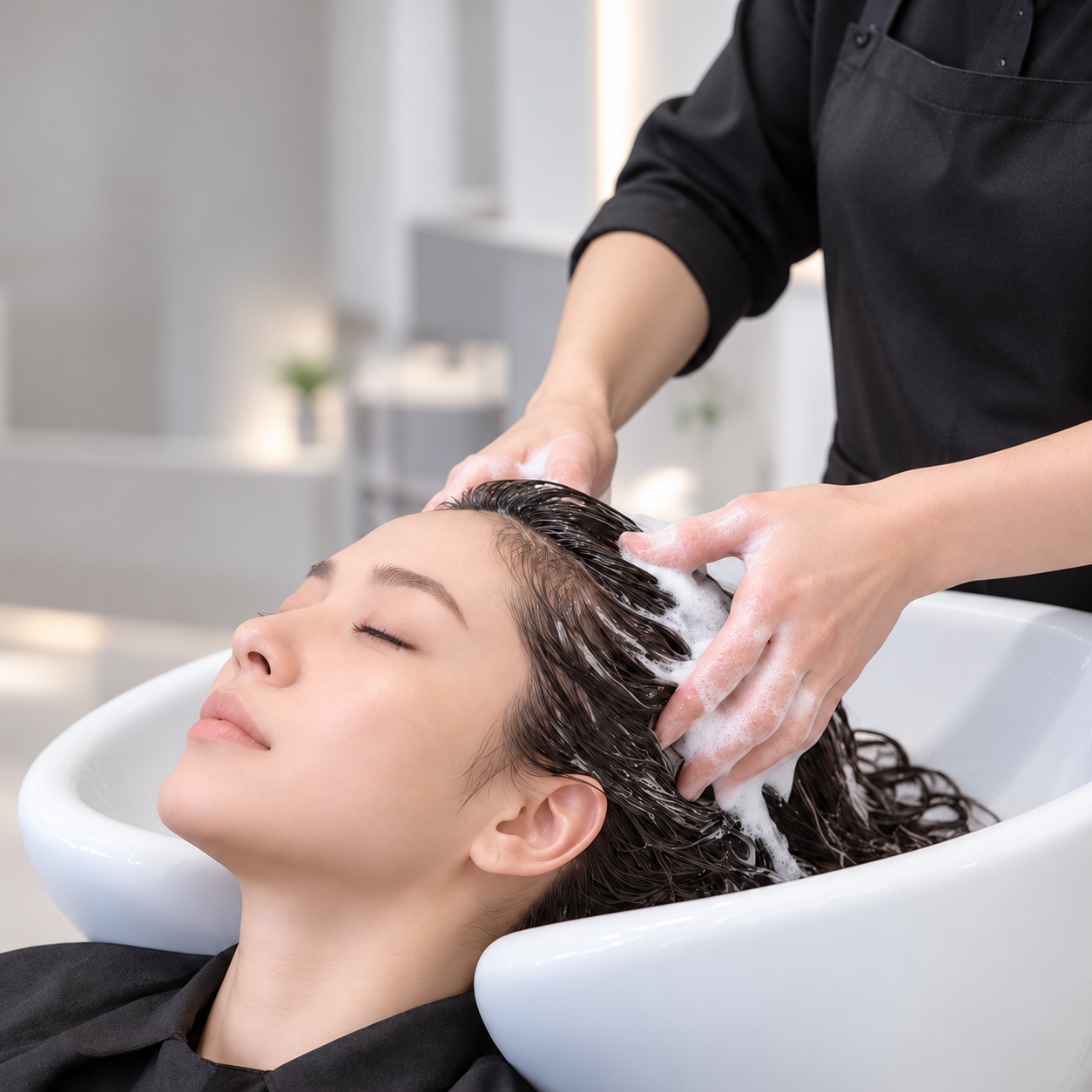
During washing, wet your hair thoroughly and massage the shampoo gently into the scalp with your fingertips. Avoid scratching with your nails, as this can irritate the skin. Rinse thoroughly to remove oil and product residue, and repeat shampooing only when necessary.
If your hair is coloured or bleached, choose a shampoo that is suitable for colour-treated hair while still meeting your scalp’s cleansing needs. The aim is to maintain a clean scalp without neglecting the condition of the hair lengths.
Condition the Mid-Lengths and Ends
Conditioner is important for improving the softness and manageability of dry hair. After shampooing, gently squeeze excess water from your hair and apply conditioner mainly to the mid-lengths and ends. Leave it on for the recommended time before rinsing thoroughly.
A suitable conditioner can help reduce friction, improve detangling and make hair feel smoother. This is particularly useful for people with long hair, highlights, bleached sections or frequent heat styling. Choosing a formula that matches your hair texture can help prevent the roots from becoming unnecessarily weighed down.
Use a Hair Mask for Extra Conditioning
If your hair ends feel especially dry, rough or tangled, consider using a suitable hair mask according to the product instructions. Hair masks provide conditioning benefits that may help improve softness, smoothness and manageability.
For oily scalp and dry hair, apply the mask mainly to the lengths and ends unless it is specifically formulated for scalp use. Using more product than recommended will not necessarily improve the results, so follow the instructions and observe how your hair responds.
Regular conditioning, combined with gentle handling and reduced heat exposure, may help improve the appearance of dry hair over time.
Reduce Heat Styling and Protect Your Hair
Excessive heat styling can make already-dry hair more difficult to manage. Whenever possible, allow your hair to dry partially before using a hair dryer, apply a suitable heat protectant and use a moderate temperature when styling.
Avoid repeatedly passing a straightener or curling iron over the same section, particularly if your hair has been bleached or chemically treated. If your hair feels brittle or breaks easily, reducing the frequency of heat styling can help limit further damage.
Apply Hair Oils and Leave-In Products Carefully
Hair oils, serums and leave-in conditioners can help improve the appearance and feel of dry ends. However, using too much product near the scalp may make oily roots look even greasier.
For fine hair, begin with a small amount of lightweight product. For thick, coarse or highly processed hair, a richer formula may be more suitable. Apply the product mainly to the mid-lengths and ends, and adjust the amount according to your hair’s needs.
Although these products can improve smoothness and reduce friction, they do not replace regular cleansing or permanently reverse every form of hair damage.
Detangle Your Hair Gently
Dry hair ends are more likely to tangle and may break when pulled aggressively. Use a suitable detangling brush or wide-tooth comb, starting at the ends and gradually working upwards. Applying conditioner can make the process easier by reducing friction between hair strands.
After washing, avoid rubbing your hair vigorously with a towel. Instead, gently squeeze out excess water using a soft towel or microfibre towel. If the ends are severely split, trimming them may improve the overall appearance and reduce tangling, as hair products cannot permanently repair a split hair shaft.
Salon Treatments for Oily Scalp and Dry Hair
When home care does not provide the results you want, a professional consultation can help you understand which aspects of your hair care routine may need adjustment. At Le Classic Hair Studio, discussing your scalp concerns, hair texture, previous chemical services and desired results can help guide your choice of suitable salon services.
Scalp Care and Cleansing Treatments
If excess oil and product residue are your main concerns, scalp-focused cleansing or suitable scalp care may be worth exploring. These services are intended to address cleansing needs and improve the feel of the scalp while considering the condition of the hair lengths.
However, cosmetic scalp treatments are not substitutes for medical care when persistent itching, redness, inflammation or flaking is present. A healthcare professional can help determine whether an underlying scalp condition requires specific treatment.
Deep Conditioning Hair Treatments
For hair that feels rough, dry or difficult to detangle, a deep conditioning treatment may help improve softness, smoothness and manageability. The appropriate treatment depends on the hair’s texture, degree of dryness and previous chemical services.
Fine hair may respond better to lighter conditioning products, while coarse or heavily processed hair may benefit from richer formulations. Although conditioning treatments can improve the cosmetic feel and appearance of the hair, results vary and they cannot reverse every form of structural damage.
Repair-Focused Treatments for Coloured Hair
Hair that has undergone repeated colouring or bleaching may benefit from a treatment designed for damaged or chemically processed hair. Depending on the formulation and service, these treatments may help improve conditioning, manageability and the hair’s resistance to breakage during handling.
Before choosing a repair-focused treatment, it is important to consider the hair’s current condition. Hair that breaks easily, feels unusually stretchy when wet or has undergone multiple lightening sessions may require a careful assessment before further chemical services are considered.
Frizz Control and Smoothing Services
If your hair is dry, puffy or difficult to manage in Malaysia’s humid weather, a suitable frizz-control or smoothing service may help improve its appearance and styling results.
Different smoothing services use different methods. Some focus on conditioning, while others involve chemical processes or high heat. Before booking, discuss the treatment method, ingredients, maintenance requirements and expected results with your stylist. If your hair is already fragile or heavily bleached, it is particularly important to determine whether the service is appropriate.
Personalised Hair Consultation at Le Classic Hair Studio
A personalised consultation can be a useful starting point if you are unsure which treatment to choose. During a consultation at Le Classic Hair Studio, you can explain how quickly your scalp becomes oily, whether your ends feel dry or tangled, which products you currently use and whether you have previously coloured, bleached or chemically treated your hair.
These details help the stylist consider your hair’s current condition and your preferred result before discussing suitable services. Instead of choosing a treatment based on trends alone, a personalised approach considers your hair history, lifestyle and maintenance preferences.
The goal is to manage the scalp’s oiliness while improving the condition and appearance of the hair lengths without placing unnecessary stress on already-damaged hair.
Common Hair Care Mistakes to Avoid
When managing oily scalp and dry hair, it is important not to focus on just one concern. Skipping shampoo because your ends are dry may allow oil and product residue to accumulate on the scalp. On the other hand, repeatedly using harsh cleansing products may leave dry or chemically treated lengths feeling rough.
Another common mistake is applying too much conditioner or hair oil near the roots. These products can be helpful for dry ends, but heavy application may weigh down the hair and make the scalp appear greasier. It is also important to avoid using clarifying shampoo too frequently without considering your hair condition, particularly if your hair is coloured or damaged.
Finally, do not assume that every salon treatment will suit every hair type. A service that works well for one person may not be appropriate for hair that is fragile, heavily processed or sensitive to particular ingredients. Choosing products and treatments according to your individual needs is more useful than following every hair care trend.
When Should You Seek Professional Advice?
If your hair remains difficult to manage despite a consistent home care routine, consider a salon consultation. Persistent dryness after colouring, excessive tangling, frizz and breakage may indicate that your hair needs a different conditioning routine or a professional assessment before further chemical services.
A salon professional can help evaluate the cosmetic condition of your hair and discuss suitable conditioning, repair-focused or styling options. However, if your scalp has persistent itching, redness, painful irritation, thick or recurring flakes, sores or unusual hair loss, consult a healthcare professional or dermatologist. These symptoms may require medical evaluation rather than cosmetic treatment alone.
Why Choose Le Classic Hair Studio for Your Hair Care Needs?
Finding the right approach to oily scalp and dry hair begins with understanding that the scalp and hair lengths may need different kinds of care. A routine that removes excess oil from the roots should also consider the conditioning needs of dry ends, particularly when the hair has been coloured, bleached or frequently heat-styled.
At Le Classic Hair Studio, a personalised hair consultation can help you discuss your hair concerns, previous chemical services and desired results before deciding on an appropriate salon service. Whether you want to improve the feel of dry ends, manage frizz, maintain coloured hair or explore suitable hair treatments, professional guidance can help you make a more informed decision.
If you are looking for hair care advice or suitable salon treatment options in Malaysia, visit the Le Classic Hair Studio website to explore the available services and contact the salon about your needs.
Frequently Asked Questions About Oily Scalp and Dry Hair
Why is my scalp oily but my hair dry?
Your scalp produces sebum, while the hair shaft needs sufficient conditioning to remain smooth and manageable. Natural oil may not spread evenly along the hair, particularly when it is long, curly, coarse or chemically treated. This can result in greasy roots and dry ends at the same time.
How often should I wash oily scalp and dry hair?
Wash your hair as often as needed to keep your scalp comfortable and clean. Some people with oily scalps may need daily washing, while others may prefer washing every other day. Use a suitable shampoo on the scalp and conditioner on the mid-lengths and ends to address their different needs.
Should I use conditioner if my scalp is oily?
Yes. Conditioner helps improve softness, detangling and manageability, especially for dry or coloured hair. Apply it mainly to the mid-lengths and ends, and rinse thoroughly to avoid weighing down the roots.
Can hair colouring cause oily scalp and dry hair?
Hair colouring, particularly bleaching and repeated chemical processing, can leave the hair lengths more porous, rough or prone to breakage. The scalp may continue producing oil normally, which means the roots can remain oily while the ends feel dry.
Which salon treatment is best for oily scalp and dry hair?
There is no single treatment that is best for everyone. Scalp-focused care may suit excess oil or residue, while conditioning or repair-focused treatments may help dry, coloured or damaged lengths. A consultation at Le Classic Hair Studio can help you explore options that match your hair’s condition and goals.
Can humid weather in Malaysia make oily scalp and dry hair worse?
Humid weather can make sweat, oiliness and frizz more noticeable, although it does not explain every case of dry hair. A suitable cleansing routine, lightweight products near the roots and conditioning on the ends can help manage these concerns.
When should I see a dermatologist for an oily scalp?
Seek medical advice if oiliness occurs with persistent itching, redness, painful irritation, thick flakes, sores or unusual hair loss. These symptoms may indicate a scalp condition that requires medical assessment.
Managing oily scalp and dry hair is about finding the right balance between scalp cleansing and hair conditioning. A suitable shampoo can help remove excess oil, while conditioner, hair masks and protective styling habits can improve the feel and manageability of dry lengths.
If your hair is coloured, bleached or frequently heat-styled, consider its condition before choosing additional products or salon services. With a consistent routine and appropriate professional guidance, you can make more informed choices about managing greasy roots and dry ends.
At Le Classic Hair Studio, a personalised consultation can help you explore hair care options based on your scalp concerns, hair history and desired results. Visit the website to learn more about available services and find a suitable approach to your hair care needs.